The Valjoux 72: The Soul of the Golden Era Chronograph
By Matthew Bain

There are certain movements that define eras — and then there’s the Valjoux 72.
For collectors, it’s more than just a caliber; it’s the mechanical heartbeat behind some of the most iconic chronographs ever made. Rolex, Heuer, Universal, Breitling, Enicar — all trusted it to power their legends. When you handle enough vintage chronographs, you start to recognize that familiar tactile click, that confident feel when the chronograph engages — and that’s the Valjoux 72 talking.

A Workhorse with Character
Produced from the 1930s into the early 1970s, the Valjoux 72 is a manual-wind, column-wheel chronograph with a 12-hour totalizer and a layout that became the blueprint for modern sports watches. It wasn’t the most expensive movement, nor the rarest — but it was built with integrity. The bridge layout is clean and logical. The finishing, while industrial, has a certain honesty to it. You can sense the Swiss pragmatism of the Vallée de Joux in every lever and screw.

What sets the 72 apart is the balance between reliability and soul. It’s robust enough to survive decades of hard use, but there’s still artistry in the way it feels. Wind one up and you’ll understand — the resistance, the way the chronograph resets to zero with authority — it’s mechanical poetry.
The Watches It Made Great
Rolex used it in the early Cosmograph Daytonas — the 6238, 6239, 6241, 6263, 6265 — all Valjoux 72 derivatives.
Heuer built the Carrera 2447, Autavia, and Camaro around it.
Universal Genève relied on it for their Compax and Tri-Compax lines.
Each brand finished and regulated the movement in its own way, but the core DNA remained unmistakable.
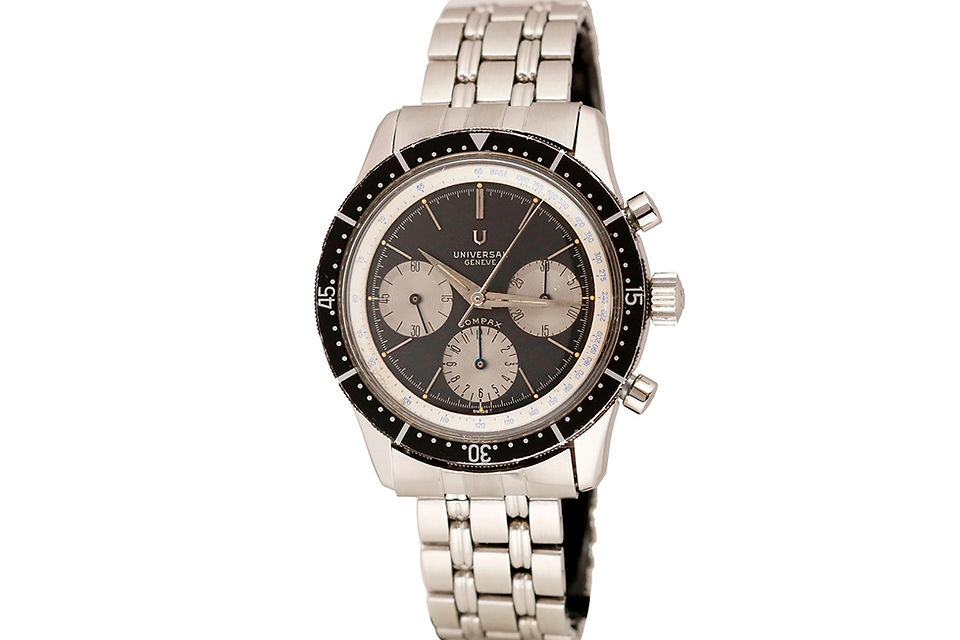

The 72 gave these watches their rhythm — that crisp, snappy feel collectors love. Even when Rolex evolved it into the caliber 727, the essence remained pure Valjoux.
The Valjoux 72C: Complexity and Class
A notable variation of the movement, the Valjoux 72C, added a complete triple calendar complication — day, date, and month — to the already intricate chronograph. This enhanced version powered one of the most complicated and collectible Rolexes ever made: the Rolex “Jean-Claude Killy” Dato-Compax.

The Jean-Claude Killy models, references 4767, 5036, 6036, and 6236, represent the pinnacle of Rolex’s mechanical ambition in the pre-Daytona era. Combining a triple date with a chronograph was no small feat, and the 72C handled it beautifully — elegant, legible, and technically brilliant. It’s a movement that shows just how versatile the Valjoux 72 base really was.
A Personal Favorite: The First Breitling Navitimer
One of my personal favorites powered by the Valjoux 72 is the very first Breitling Navitimer, produced in the early 1950s. Those first examples — before the reference 806 settled in as the standard — have a raw, tool-watch charm that feels purposeful and pure. The combination of the aviation slide rule and the precision of the Valjoux 72 made it a pilot’s instrument in the truest sense.
To me, that early Navitimer represents the perfect meeting of design and mechanics — an early expression of what the chronograph was meant to be: functional art.
The Collector’s Trick
Here’s a detail most people miss — and something every serious collector should know.
You can often identify a Valjoux 72–powered chronograph without even opening the case. Look closely at the pushers in relation to the crown:
the top pusher sits closer to the crown, while the bottom pusher is spaced slightly farther away.

That asymmetry is a subtle giveaway of the Valjoux 72 architecture. Once you’ve trained your eye, you can spot it instantly — whether it’s on a Rolex Daytona, a Heuer Carrera, or a Universal Compax. It’s one of those tells that separates the seasoned collector from the casual admirer.
Why Collectors Still Care
In today’s world of vertical clutches and automatic modules, the Valjoux 72 feels almost human. You can see everything happening — the levers engaging, the column wheel turning, the heart-shaped cam pulling the hands back to zero. It’s like watching a miniature ballet of steel.

For collectors, that transparency matters. It connects you to an era when movements were designed to be repaired, not replaced — and it explains why a 60-year-old chronograph can still run like the day it left the factory.
The Bottom Line
There are technically better chronographs out there, but few have the same soul. The Valjoux 72 is the movement that taught generations of watchmakers what precision feels like — and taught collectors what real mechanics sound like.
When I open a caseback and see that familiar bridge layout, I know I’m about to handle something special. It’s not just nostalgia — it’s respect.
Comments