The MAYA Design Language of Raymond Loewy—A Legacy That Shapes My World
by Matthew Bain
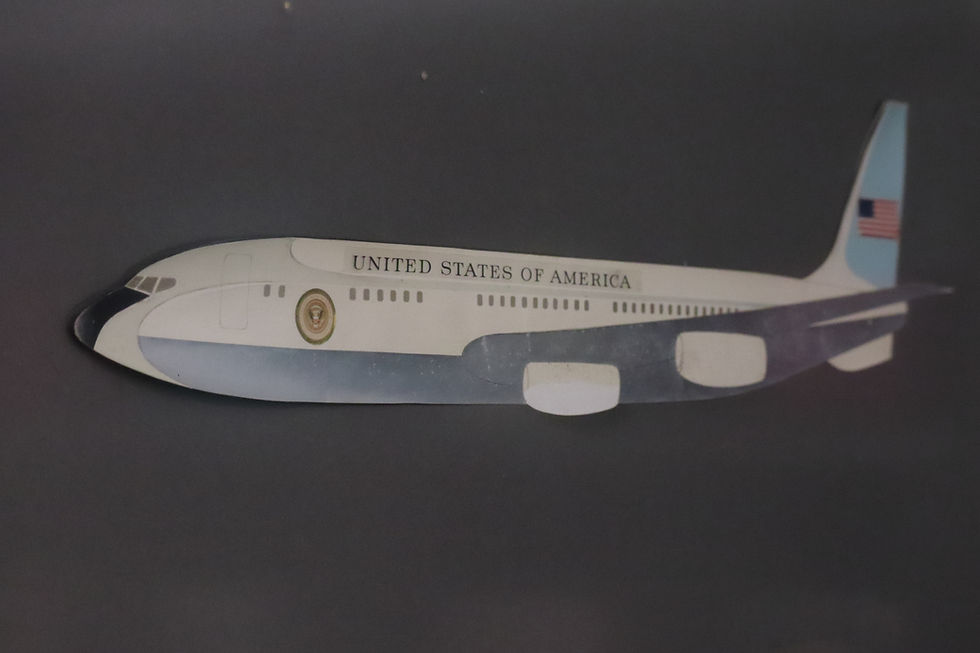
As a watch dealer, I’ve spent over three decades chasing objects that marry form and function—timepieces that look as good as they perform. That’s why I’ve long admired Raymond Loewy, the industrial designer whose “MAYA” philosophy (Most Advanced, Yet Acceptable) revolutionized everything from locomotives to logos. Even the history of human space travel was in part shaped by the man. In my Coral Gables office, I’m honored to display a piece of his legacy: a vibrant color study for Air Force One’s livery (aka the unique paint job on the US presidential airplane), acquired alongside other treasures from a Christie’s sale of his collection in 2000. But my connection to Loewy runs deeper, rooted in lessons from my father—a furniture businessman and watch collector—who taught me about appreciating objects that balance innovation with timeless appeal. Here’s why Loewy’s MAYA resonates with me, how it shapes my view of watches, and why it matters to collectors.
Decoding MAYA: The Art of Balance

Loewy’s MAYA philosophy is a masterclass in restraint and ambition. He believed design should push boundaries but remain approachable— offering the “most advanced” while still “acceptable” to its audience. A deceptively simple principle. In the 1930s, he applied this to the Pennsylvania Railroad’s Class S1 locomotive, a streamlined giant that looked like it leaped from a futuristic novel yet felt familiar with its sweeping, muscular lines. He repeated the trick in the 1950s with the redesigned of the recognizable Coca-Cola bottle, refining its curves to feel modern yet true to the classic form, and again with the Studebaker Avanti, a car that was bold yet still drivable. MAYA is about finding the sweet spot where innovation meets comfort, where the new feels like it was always meant to be.
In watches, I see the infusion of MAYA everywhere as a guiding light. The Rolex Submariner, born in 1953, was a technical leap—a more robust dive watch built for the deep sea—but its clean visual aesthetic made it an instant classic. The Patek Philippe Nautilus, designed by the heralded Gerald Genta and launched in 1976, shocked purists with its porthole-inspired shape, yet its elegant lines and wearability won over collectors. These are MAYA designs: advanced enough to redefine their categories, acceptable enough to be adopted as public icons. Loewy in his time undoubtedly would’ve seen them as kindred spirits to his own work—objects that challenge without alienating.
Loewy even touched upon timepieces directly. Early in his career, he designed the Columaire Skyscraper Radio Clock for Westinghouse, a sleek blend of Art Deco and functionality, and contributed to at least one 1920s Elgin wristwatch that’s now a collectible gem, as seen in recent auctions. These pieces, though less famous than his logos, trains, or cars, show his ability to apply MAYA to the intimate scale of horology, balancing bold aesthetics with practical use.
A Personal Connection Through My Father
My appreciation for Loewy didn’t start with watches—it began with my father. A furniture businessman from New York who had a large chain of stores called Modernage through Florida. My father also designed and manufactured items in Italy and China. He had an eye for pieces that were both beautiful and practical, like a mid-century Eames chair that could anchor a room yet feel inviting. Moreover, he happened to be one of the largest watch collectors in the U.S., with a collection that ranged from 1940s Omegas to early Patek Philippe complications. As a kid, I’d spend hours with him, watching him polish a walnut credenza or tinker with a chronograph, absorbing his philosophy that great design is both art and utility.
“Design should invite you in,” he’d say, holding up a chair or a watch. “It’s not about showing off—it’s about feeling right.” He’d point to a chair’s clean lines or a watch’s balanced dial, showing me how every detail served a purpose even the empty space. Those lessons stuck with me when I started dealing watches in the tail-end of the 1980s. I saw parallels between his furniture—crafted to be both art and utility—and the timepieces I’d work with, like a Cartier Tank that looked sculptural yet kept perfect time. When I ultimately discovered and dove into Loewy’s work, it felt familiar like everything was in alignment. His MAYA philosophy was my father’s wisdom on design distilled: innovate, but honor what people already love.
My father’s influence shaped not just my taste but my approach to business. He taught me to seek pieces with stories—watches that, like his furniture, carried a legacy. Writing this makes me consider an early Omega Speedmaster from the 1950s-60s, with its moon-landing pedigree and simple black dial—Ready to take on the unknown universe, and yet also immediately identifiable with the watches of yesteryear and today.
Owning a Piece of Loewy’s Legacy
In 2000, I had the chance to bring Loewy’s spirit into my world. Christie’s held an auction of his personal collection, a treasure trove of sketches, models, and designs from a man who’d shaped the 20th century. I bid fiercely for a few items, including a striking color study for Air Force One’s livery—a bold composition of blues and whites that defined the plane’s look for President Kennedy in 1962. When the gavel fell, I felt the same rush as closing a deal on a Paul Newman Daytona. That piece now hangs in my office, reminding me daily of what great design can achieve.
The Air Force One study isn’t just art—it’s MAYA in action. Loewy took a functional government plane and gave it a look that was stately yet approachable. Every time I glance at it, I’m reminded of why I love watches like a Breguet tradition which modernized the design language of the brands historic pieces, and it’s open form has influenced many of the pieces that would follow from many of today's most aspiring independent makers. It’s the same balance my father admired in his furniture and watches—a balance I strive to bring to every deal at Matthew Bain, Inc.

MAYA’s Influence on Watch Collecting
Loewy’s philosophy is a blueprint for collectors. The best watches aren’t the loudest—they’re the ones that meld innovation with wearability. Take the Jaeger-LeCoultre Reverso, born in 1931 for polo players. Its swiveling case was a technical marvel, but its Art Deco lines make it a dress watch classic. Or the Breitling Navitimer, with its slide-rule bezel—a complex tool that feels intuitive on the wrist.
When I advise clients, I point them toward watches that embody this balance. A 1950s Rolex GMT-Master, with its dual-time function, was a leap for travelers but simple enough to become a staple. A Vacheron Constantin Overseas blends rugged utility with refined aesthetics, making it a modern heirloom. These pieces aren’t just purchases—they’re treasures you’ll pass down, like my father’s watches were to me. I often think of him when I handle a piece like a 1960s IWC Ingenieur, its clean design hiding a robust anti-magnetic movement—a watch that, like his furniture, serves without shouting.

Loewy’s influence also keeps me grounded in an industry full of hype. My father taught me to value substance over flash, and MAYA reinforces that. I’d rather sell a client a timeless pie-pan Omega Constellation than a trendy piece that’ll fade in a year. The Air Force One artwork in my office is a talisman of that ethos—a reminder to curate watches that, like Loewy’s designs, feel revolutionary yet right.
A Legacy That Lives On
My father’s love for furniture and watches gave me a lens to see the world—one where design is about connection, not competition. Loewy’s MAYA philosophy sharpened that lens, showing me how to seek beauty that endures. Whether I’m appraising a rare Patek Calatrava, driving my vintage Porsche (another nod to mechanical artistry), or glancing at the Loewy art on my wall, I’m chasing that balance of innovation and familiarity. At Matthew Bain, Inc., we don’t just deal in watches—we preserve legacies, one timepiece at a time.
Do you have a watch with a story to tell? Or are you searching for one that will? Reach out at info@matthewbaininc.com or call 305-534-5588. Let’s find a piece that, like Loewy’s designs, feels most advanced yet perfectly acceptable.
Comments